
MXE
 v — Agent Integration
Orchestrate remote servers with cryptographic authority. Ed25519-signed command execution, Rust edge workers, real-time telemetry, and AI-powered triage — from a single desktop pane.
Security-first remote orchestration for operators who don't compromise.
Every Hub→Satellite command is cryptographically signed with NaCl crypto_sign. Verify before execute — no trust assumptions.
Memory-safe edge workers: 28-pattern blocklist, 15s timeout, 1GB memory limit, rate limiting, OOM-proof frame caps.
Deep server inspection: Overview, Repos, Services, Processes, AI Tools, Health, and Agents — all in one tabbed interface.
Real-time CPU history rendered as sparkline charts on every server card. Live stats updated every 30 seconds with color-coded warnings.
Staleness badges show data freshness at a glance. Background refresh keeps the UI instant while discovery data stays current.
Automated health monitoring: disk usage, system load, memory pressure, and zombie process detection with pass/fail indicators.
Spawn Claude Code agents directly into remote repositories from the dashboard. AI-assisted development with full portal security.
Conversational LLM with markdown rendering, command history, and ReAct tool-calling loop. Chains up to 5 command iterations.
Triage fix suggestions require explicit confirmation before execution. Toggle between assisted and hands-free modes per server.
Full connection management: edit, remove, or copy host:port for saved portals. Encrypted credential storage with zero-config resumption.
Pin important repositories to the dashboard for quick access. Pinned repos surface above the fold with at-a-glance status.
Encrypted Hub storage. In-memory Satellite vault. API keys never leave the main process. Never persisted to disk remotely.
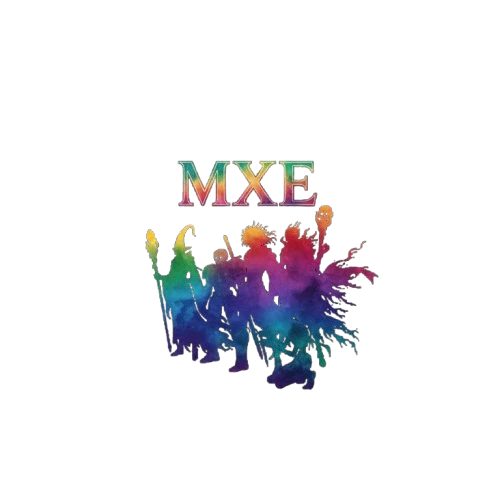
MXE's architecture is modeled after an adventuring party. Each component has a distinct role:
Three components cooperate through a cryptographically authenticated WebSocket protocol.
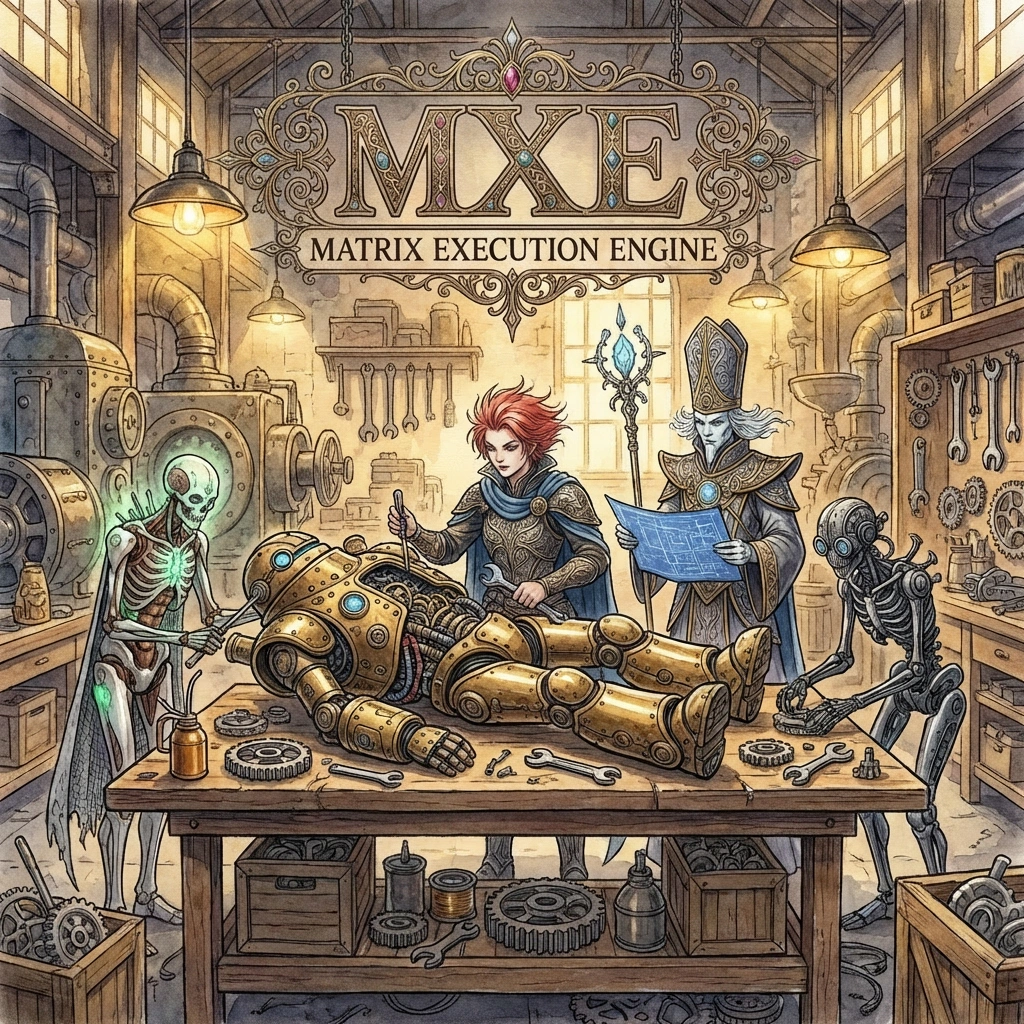
The Satellite is a single Rust binary. No runtime dependencies, no containers, no configuration files. Upload it, launch it, pair it.
Defense-in-depth across every layer.
crypto_sign combined mode on every commandulimit + timeout OS-level enforcementnodeIntegration: false, contextIsolation: truescript-src 'self'NoNewPrivileges, ProtectSystem=strict| Layer | Protection | Enforcement |
|---|---|---|
| Transport | WebSocket size limits | 5MB message, 1MB frame |
| Rate Limit | Token bucket | 20 msg/sec, disconnect on exceed |
| Authentication | Ed25519 signature | Every command verified |
| Authorization | Single Hub binding | Only paired key accepted |
| Blocklist | 28 destructive patterns | Case-insensitive, pre-execution |
| Timeout | Execution sandbox | 15s + SIGKILL + 1GB ulimit |
| Isolation | Electron + systemd | Context isolation, privilege drop |
| Memory Safety | Rust (Satellite) | Zero buffer overflows by design |
+ 16 additional patterns: TRUNCATE, init 0/6, halt, poweroff, chown -R nobody, format c:, and more
The triage system is powerful but constrained. Every recommendation passes through multiple safety layers before it can affect your servers.
rm -rf /, the Satellite's 28-pattern blocklist catches it
From install to full orchestration in under five minutes.
Download the Electron app. Hardened shell: nodeIntegration: false, strict CSP. API keys encrypted in main process.
Click Slide Satellite, enter SSH details. MXE compiles Rust binary, uploads via SCP, launches with nohup, captures pairing code.
Exchange Ed25519 public keys over WebSocket. Satellite signs proof with NaCl. Hub verifies. Trust is mutual and mathematical.
CPU/MEM/Disk stats every 30s. Discover repos, services, and processes. Dispatch signed commands with blocklist-checked, timeout-enforced, real-time results.
Critical logs auto-intercepted, scrubbed, LLM-evaluated. Commander Chat delegates bash commands to Satellites with tool calling.
Exponential backoff (1s→30s cap). Keepalive heartbeat. Crash telemetry. systemd hardening. OTA updates. DEFCON 1 kill switch.

MXE is just getting started. Here's where we're headed.
The path from MVP to General Availability.

MXE is built with security and reliability as first principles. Every feature is tested, every command is signed, every action is auditable.
Beta builds. Auto-updater checks on every launch.
Electron desktop app
Download .exe
Matrix eXecution Engine — Orchestrate with authority.